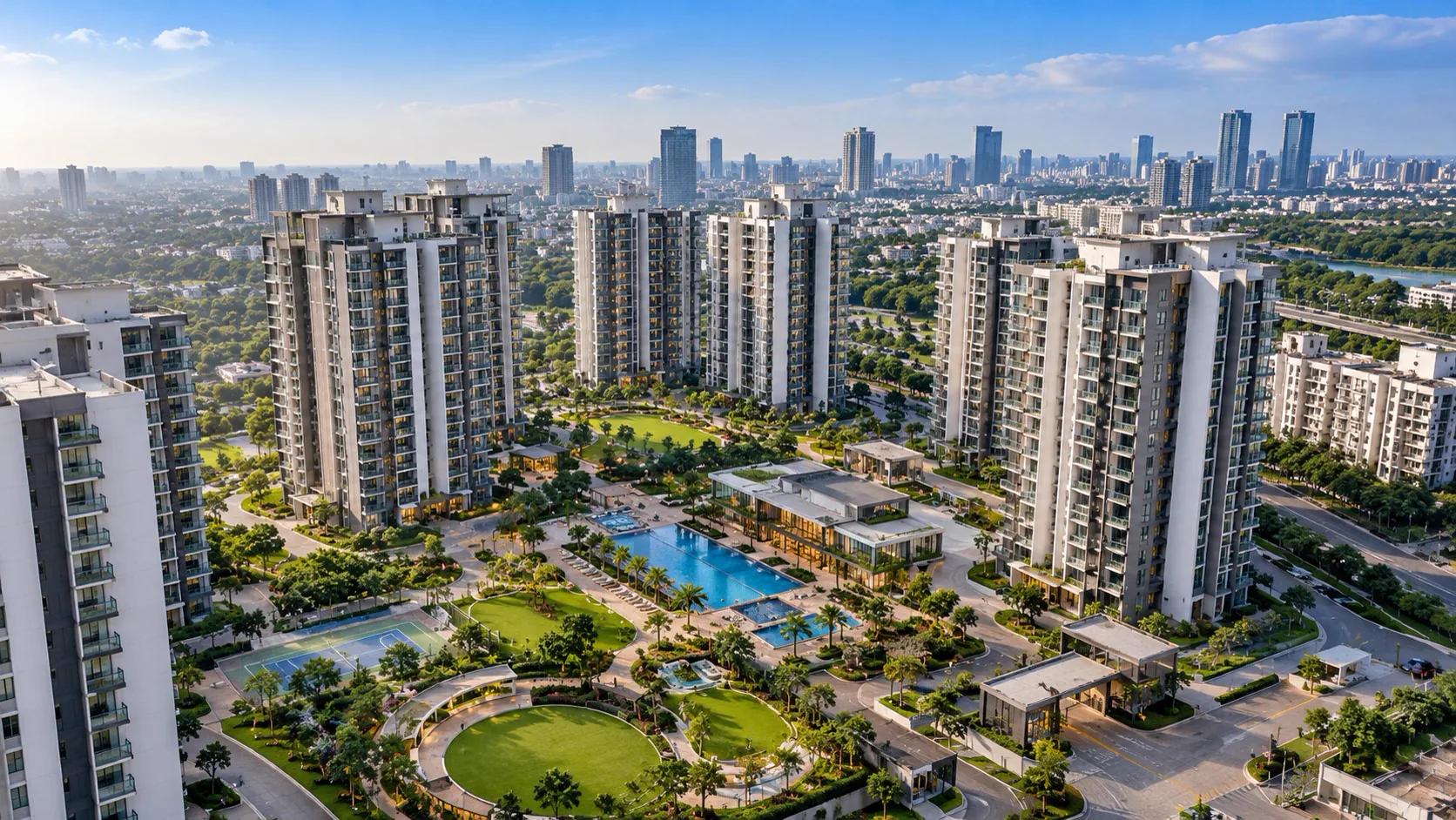
Facade & plaster repair
Remove loose, hazardous plaster, treat exposed reinforcement and reinstate the facade with polymer-modified mortar.
Engineered high-rise repairs and waterproofing for residential societies and commercial buildings. Diagnose the cause, plan the right repair, and protect the property for the long term.
We focus on diagnosing building defects and matching each repair to the site conditions, materials and required safety controls.
Remove loose, hazardous plaster, treat exposed reinforcement and reinstate the facade with polymer-modified mortar.
Investigate moisture and address suitable bathroom, duct and terrace leakage with targeted waterproofing methods.
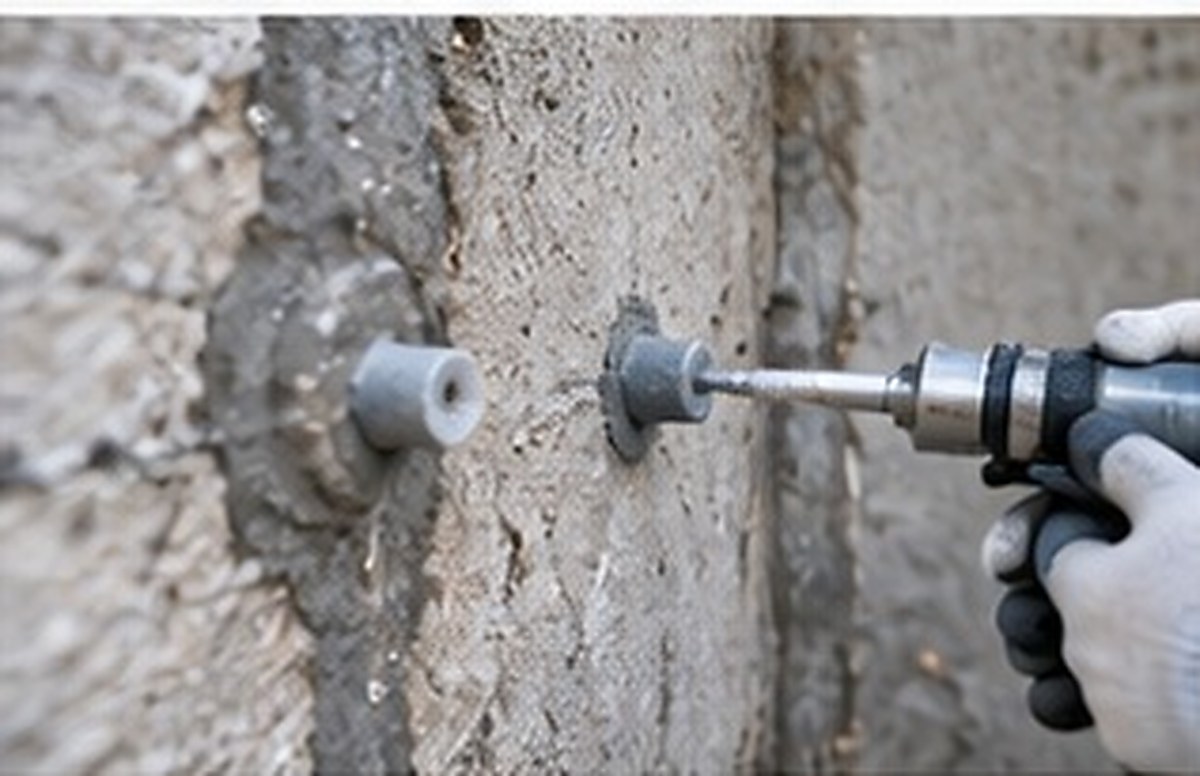
Repair diagnosed cracks in walls, beams and columns using appropriate injection, reinforcement treatment and repair materials.
Apply suitable elastomeric, anti-fungal exterior coatings to help protect repaired surfaces from weather and fine cracking.
*Coverage and visit schedule depend on the service and are confirmed in the project documents.
Shared buildings need more than a repair method. Site access, pedestrian routes, parked vehicles and clear communication all need to be considered before work begins.
Plan high-access work with suitable protective nets, dust curtains and personal protective equipment for the task and site.
The brochure's society-friendly approach includes low-noise tooling, dust containment and daily debris disposal to reduce disturbance.
Daily photo and video activity updates can be shared with RWA representatives so work progress is easier to follow.
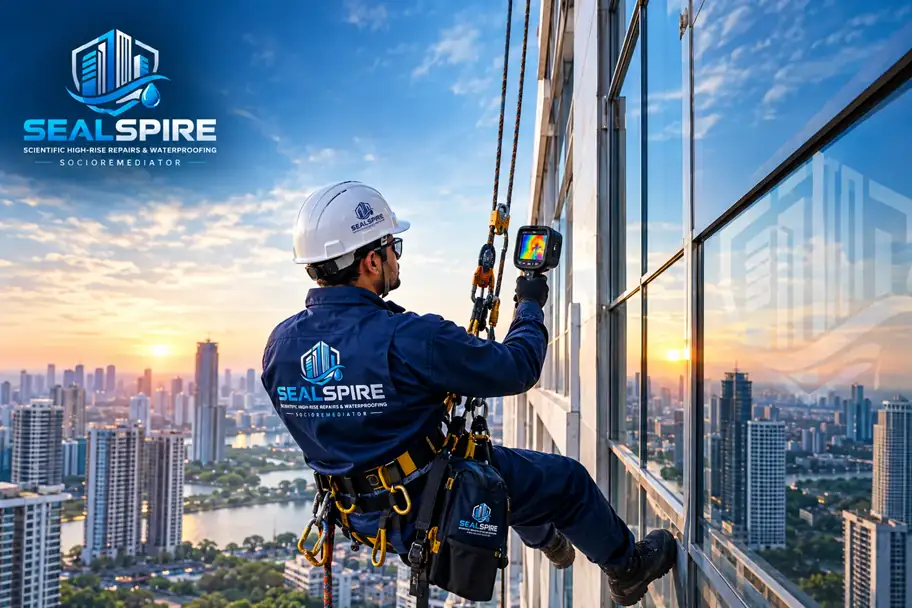
Traditional surface fixes can miss the root cause. SealSpire's process starts with inspection and an engineering assessment, then sets out a repair proposal for the RWA or property owner to review.
A clear, documented process helps residents and decision-makers understand what is being repaired and why.
 1
Assess moisture and structural defects using appropriate diagnostic tools. Record the visible symptoms and inspect the surrounding area for clues to their source.
 2
Document findings, likely root causes and a recommended scope. The RWA or owner can review the photographic report and itemized proposal.
 3
Plan access, protective netting, dust control and personal protective equipment around residents, walkways and vehicles.
 4
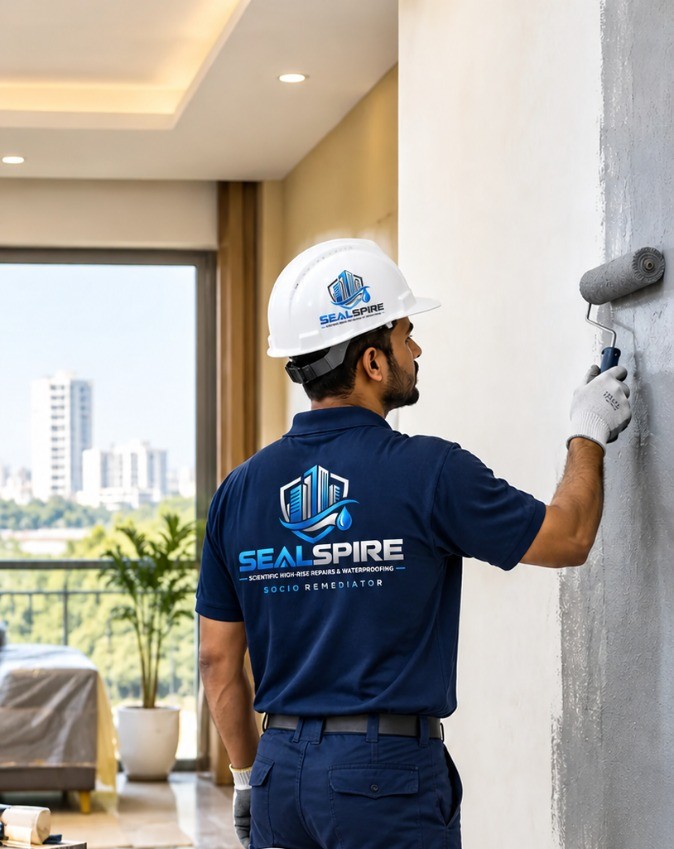
Carry out the approved work using specified materials and trained applicators. Progress updates can help the society follow activity on site.
 5
Record completed areas, issue the agreed written warranty and arrange applicable inspection visits. Keep the work records available for future maintenance planning.
Inspection methods, repair scope, follow-up schedule and warranty terms are confirmed for each project. Images are illustrative and do not show completed SealSpire projects.
A few observations can make the first conversation more useful. You do not need to diagnose the fault yourself—share what you can see and when it occurs.
Do not approach unstable plaster or attempt work at height. Keep residents clear of areas where material appears loose and request a qualified site assessment.
The brochure lists Sika, Dr. Fixit Specialist Range, Fosroc and Asian Paints among the industrial brands used for appropriate repair systems.
Product selection should follow the diagnosed defect, compatibility requirements and the approved scope. The written proposal should identify the materials selected for your project.
See repair methodsReview an itemized scope, pricing and timeline commitment before approving work.
Service-dependent warranty terms are issued in writing for the approved work.
Use trained technical applicators for the specified repair system and site conditions.
Applicable post-repair inspection intervals are agreed and recorded for the project.
SealSpire's society partnership program is designed for residential associations looking for a structured approach to recurring building maintenance.
Tell us about the building and the issues you are seeing. We will arrange the next step for a complimentary technical site audit.
Request an audit